Saudi Arabia’s industrial growth is relentless. Logistics hubs, manufacturing plants, cold stores, aircraft hangars, and retail warehouses need to come online in months, not years. That is why Pre-Engineered Steel Buildings in Saudi Arabia have become the default choice for industrial and large-span commercial facilities across the Kingdom — from Modon industrial cities to NEOM support bases.
Rise & Build delivers complete PEB solutions: design, fabrication, supply, erection, and finishing. This guide walks through what PEB means in practice, where it wins versus traditional construction, and how to select a partner capable of executing to international standards in Saudi conditions.
What Are Pre-Engineered Steel Buildings?
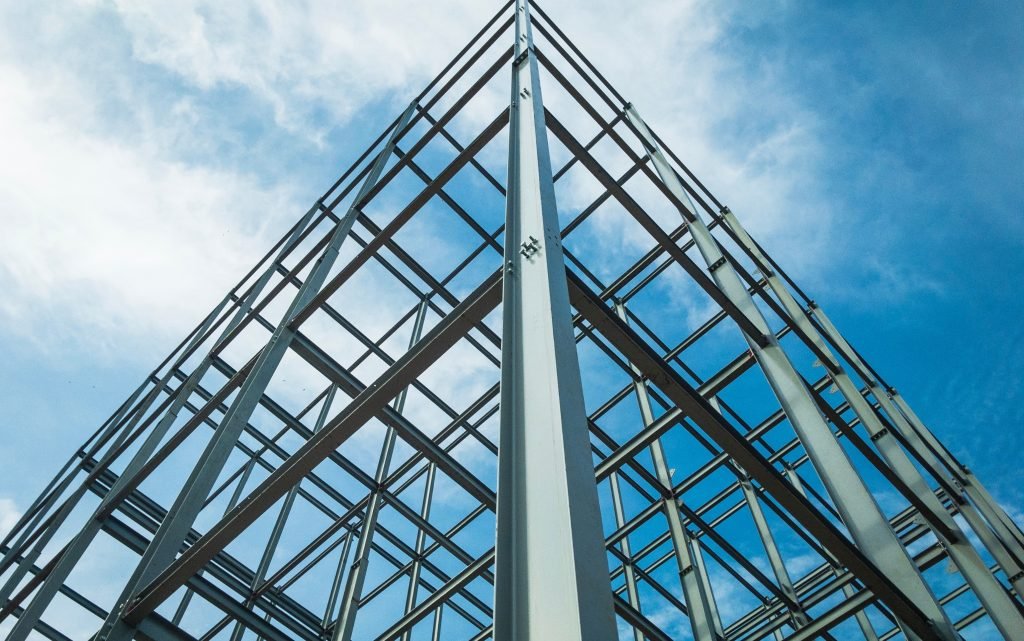
A pre-engineered steel building is a structure designed, detailed, and fabricated off-site using high-strength steel, then erected rapidly on site. Unlike conventional steel buildings, PEB members are tapered and optimised exactly for the loads, geometry, and use of the project. The result is less steel, faster construction, and predictable cost.
Components of a Typical Pre-Engineered Steel Building
- Primary frames (columns and rafters) — typically tapered I-sections
- Secondary members (purlins, girts, eave struts) — cold-formed Z and C sections
- Cladding — insulated sandwich panels or single-skin profile sheets
- Roof system — standing-seam or screw-down sheeting with thermal insulation
- Anchor bolts, base plates, and foundation interface
- Façade, doors, windows, skylights, and louvres
- Mezzanines, crane beams, and staircases as required
- Drainage, rainwater goods, and flashings
Why Pre-Engineered Steel Buildings Outperform Traditional Construction
Speed of Delivery
A 10,000 m² warehouse can be fabricated while foundations are being cast. Erection typically takes 6–10 weeks. Traditional concrete structures often need double that time.
Cost Predictability
Design optimisation, factory fabrication, and standardised components deliver a firmer price than custom-built alternatives.
Long Clear Spans
PEB frames easily achieve 30–60 metres column-free spans — ideal for racking, production lines, and hangars.
Future Flexibility
Bays can be extended, cranes upgraded, and mezzanines added thanks to the modular design basis.
Sustainability
Steel is highly recyclable, and pre-engineering minimises material waste.
Applications of Pre-Engineered Steel Buildings in Saudi Arabia
- Logistics warehouses and distribution centres
- Manufacturing plants and heavy industry
- Cold stores and refrigerated warehouses
- Retail big-box stores and showrooms
- Aircraft hangars and maintenance facilities
- Sports halls and multi-purpose community buildings
- Agricultural sheds, poultry farms, and greenhouses
- Labour accommodation and staff welfare buildings
- Car parks and workshop facilities
The Rise & Build PEB Delivery Process
Step 1: Requirement Capture
Our engineers capture functional, spatial, operational, and regulatory requirements. Loads (wind, seismic, crane, roof live), thermal targets, and future expansion are all discussed up-front.
Step 2: Design and Optimisation
We design to AISC, MBMA, and Saudi Building Code (SBC 301, 306) standards, optimising member sizes with specialist software (Staad, Tekla) to balance strength, cost, and buildability.
Step 3: Fabrication and Quality Control
Primary frames are fabricated in approved facilities under strict welding and coating procedures. Each member is marked, inspected, and shipped with a materials traceability record.
Step 4: Foundations and Site Preparation
While steel is being fabricated, our civil team prepares foundations, anchor bolts, and site logistics so erection can start the moment deliveries arrive.
Step 5: Erection and Cladding
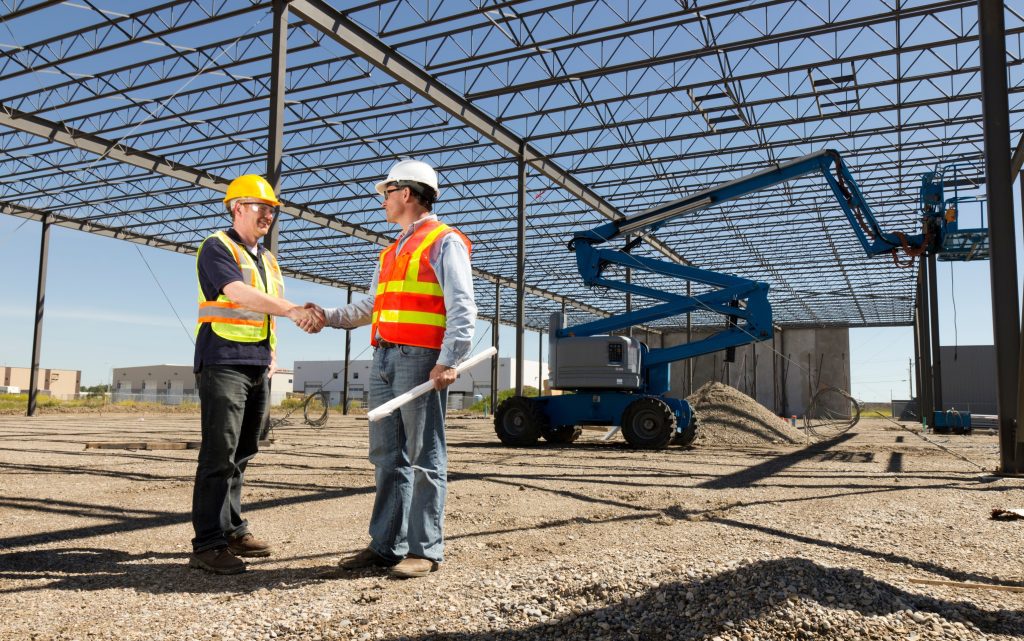
Certified riggers erect frames using cranes, followed by secondary steel, roof sheeting, and wall cladding with sealed flashings.
Step 6: MEP, Finishing, and Handover
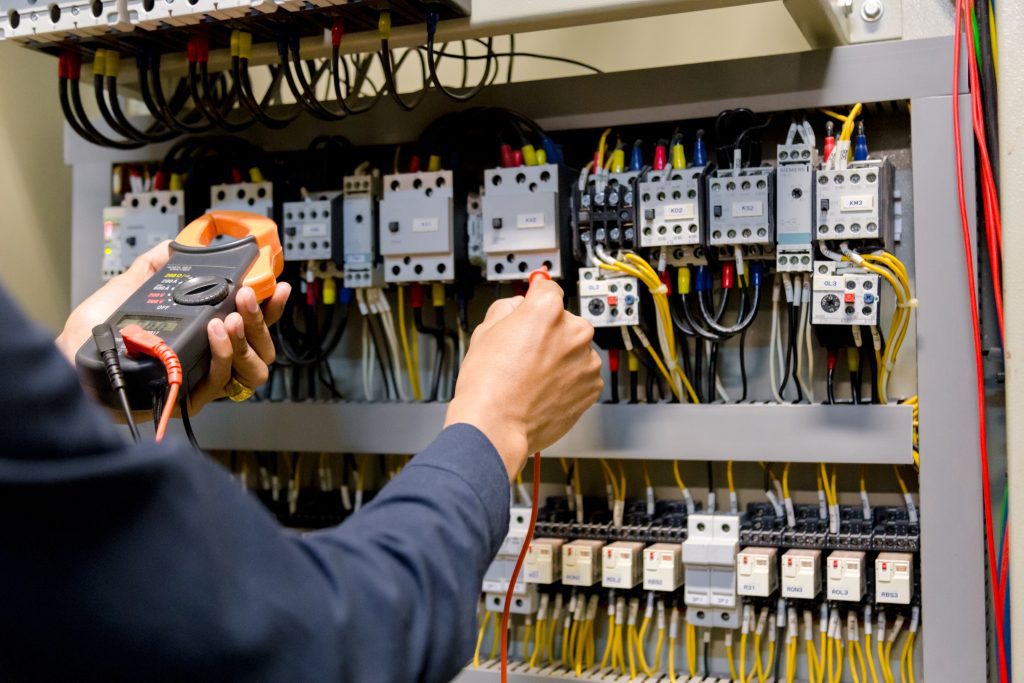
Our integrated MEP capability brings lighting, power, HVAC, firefighting, and low-current systems into the shell without handoff friction.
Engineering Considerations That Distinguish Quality PEB
- Wind design for Saudi coastal exposures — critical for Jeddah, Dammam, and NEOM sites.
- Thermal insulation — U-values and vapour barriers that keep cooling bills low.
- Fire resistance — intumescent coatings or sprinkler protection as code requires.
- Corrosion protection — galvanising, zinc-rich primers, and polyurethane top coats for coastal humidity.
- Drainage and waterproofing — essential during flash rain events.
Benefits of Partnering with Rise & Build for Pre-Engineered Steel Buildings
End-to-End Delivery
From concept through to commissioning, a single contractor owns design, civil, steel, cladding, and MEP — no blame games.
Certified Design Standards
Our engineering complies with AISC, MBMA, SBC, and ASCE loading requirements, validated by third-party peer reviewers where needed.
Approved Supply Chain
We work with major Saudi and regional fabricators with ISO-certified facilities, providing clients with cost-effective options without compromising quality.
Integrated Civil & MEP
Foundations, power, lighting, HVAC, and firefighting scope are delivered under the same contract — reducing interface risk and project duration.
Local Mobilisation
Offices in multiple regions allow us to mobilise erection teams quickly across the Kingdom.
How to Choose a PEB Contractor
- Confirm design standards and software capability.
- Request fabrication facility audits and ISO certifications.
- Ask for client references on similar span and use.
- Review erection safety record and subcontractor management.
- Evaluate coordination with civil works and MEP scopes.
- Understand warranty terms for steel, coating, and cladding.
Common PEB Mistakes We Help Clients Avoid
- Under-specifying cladding thermal performance, leading to runaway HVAC costs.
- Missing crane loads or mezzanines, forcing expensive retrofits.
- Inadequate corrosion protection on coastal sites.
- Weak lateral stability design failing wind or seismic checks.
- Poor integration with MEP, causing clashes in roof and wall penetrations.
Ready to Build Faster with Pre-Engineered Steel?
Whether you need a logistics warehouse, a manufacturing plant, or a community facility, Rise & Build delivers pre-engineered steel buildings that are engineered correctly, built safely, and handed over on time.
Call +966 56 5111 175 or email info@riseandbuild.sa to discuss your PEB project with our engineering team.
Frequently Asked Questions About Pre-engineered Steel Buildings
How much do pre-engineered steel buildings cost in Saudi Arabia?
A basic industrial PEB typically ranges from 950 to 1,800 SAR per square metre depending on span, height, cladding quality, and site location. Insulation standards, crane loads, and interior fit-out influence the final price significantly.
How long does it take to build a pre-engineered steel building?
A 10,000 m² warehouse can typically be delivered in 5–7 months from contract award — 2–3 months for design and fabrication, and 2–4 months for on-site erection and cladding. Traditional concrete construction of the same scope often takes twice as long.
Are pre-engineered steel buildings suitable for coastal Saudi sites?
Yes, provided corrosion protection is specified correctly. Hot-dip galvanising, zinc-rich primers, polyurethane top coats, and stainless-steel fasteners are essential. Cladding must also resist salt-laden wind at coastal and near-coastal locations.
Can pre-engineered steel buildings be extended later?
Yes. Proper design at the outset — with end-bay provisions, spare column bases, and utility stubs — makes future extension straightforward. Retrofitting a non-designed extension is usually painful and expensive.